
Origination built to your mandate
Target counties, acreage, parcel characteristics, infrastructure, exclusions, commercial structure, and schedule become a disciplined sourcing brief.

Developers • investors • infrastructure partners
DFREL helps partners convert a development thesis into an organized Virginia/PJM property pipeline—combining land sourcing, owner engagement, real-estate execution, and stakeholder coordination.
Experience figures reflect cumulative work associated with DFREL leadership and project teams. They do not represent projects owned, financed, engineered, or constructed by DFREL.
Why partners engage DFREL
DFREL operates between the project criteria and the real property—where owner trust, local knowledge, accurate records, site access, agreements, and public-sector relationships determine whether an opportunity advances.
Target counties, acreage, parcel characteristics, infrastructure, exclusions, commercial structure, and schedule become a disciplined sourcing brief.
Ownership, access, zoning, visible constraints, land use, adjacent parcels, utility context, and unanswered diligence questions are organized for decisions.
Respectful direct outreach, bilingual communication when needed, site access, owner education, negotiation support, and documented follow-up.
Support for letters of intent, options, leases, purchases, easements, assignments, and transaction milestones under the appropriate agreements.
Early engagement with counties, economic-development teams, planning staff, utilities, and community stakeholders when the mandate requires it.
Qualified prospects, sources, risks, communications, follow-up dates, document status, and next actions—not an unstructured list of parcels.

Sourcing and assessment
We do not stop at acreage. DFREL helps organize the facts a development team needs to decide whether a property belongs in the active pipeline.
Virginia/PJM pilot
A pilot establishes a defined territory, minimum criteria, exclusions, communication rules, pipeline stages, deliverables, and a reporting cadence before expanding the mandate.
Define a pilot with DFRELMarket, technology, use, acreage, timing, infrastructure, diligence, and commercial requirements.
Priority counties, utility or RTO context, site categories, and owner profiles.
Property facts, owner interest, screening notes, risks, sources, and next actions.
Introductions, site access, negotiations, documents, and transaction coordination.
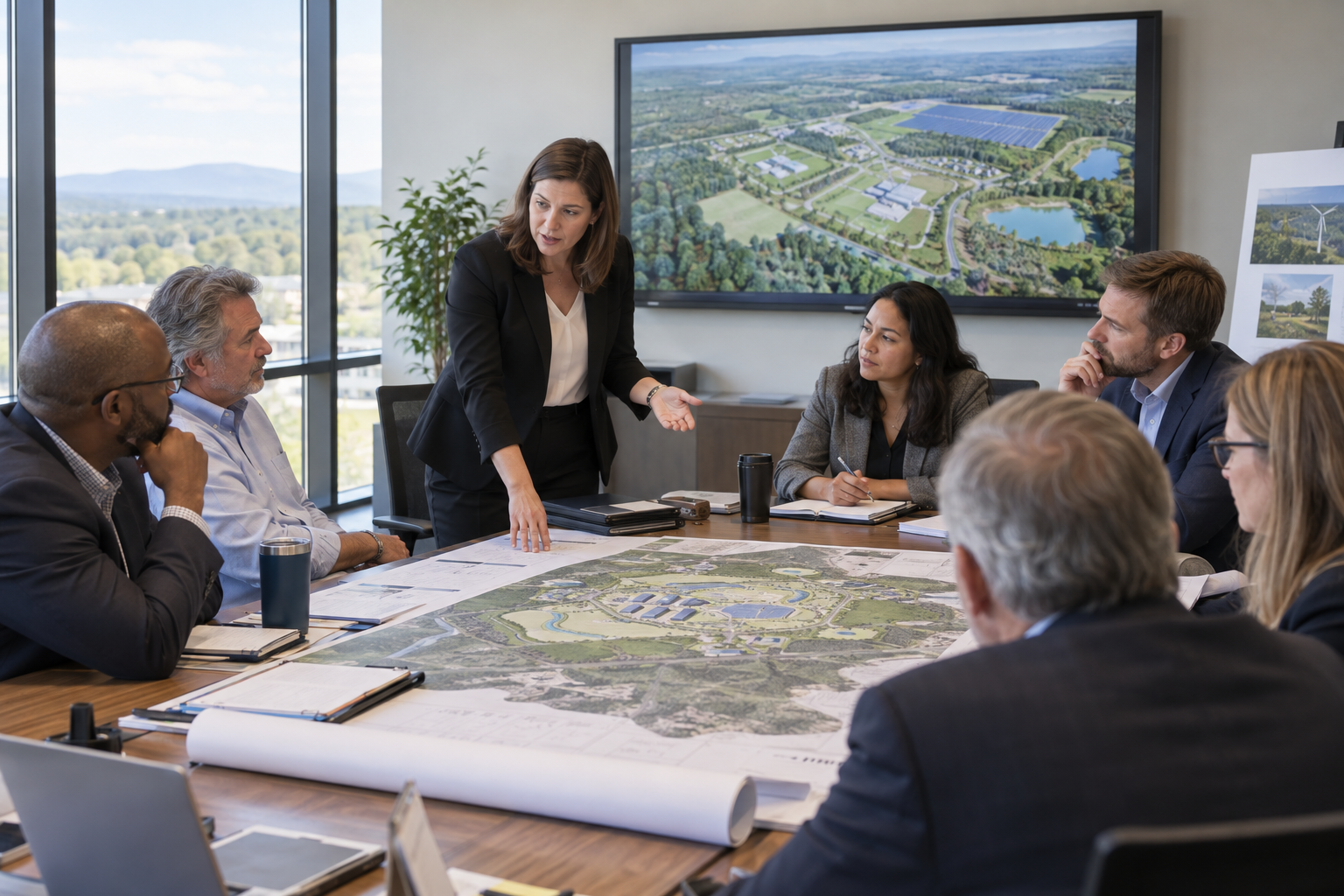
Government and stakeholder coordination
When appropriate, DFREL can help organize early property facts, concept materials, owner context, meeting coordination, and local introductions so partners enter government and economic-development discussions better prepared.

Owner relationships and site control
Owners need clear communication about the property rights requested, study access, timing, payments, assignments, restoration, decommissioning, and what happens if the project does not proceed. DFREL helps keep the real-estate conversation organized and respectful.
What a partner receives
The goal is a documented working pipeline that development, investment, and infrastructure teams can evaluate consistently.
Owner contacts, communication history, responses, follow-up dates, and disposition.
Property information, assumptions, open questions, sources, constraints, and next diligence.
Licensed real-estate capability, stakeholder coordination, bilingual outreach, and Virginia market context.
Bring us the criteria
Send the minimum site criteria, preferred geography, target schedule, decision process, and desired site-control structure. DFREL can translate them into a proposed sourcing scope.